Article
The Rise of Terroir Bars
In 2026, coffee lovers aren’t just asking “Where is this from?” — they’re asking why it tastes this way. Terroir bars are redefining the café experience by turning origin into the main event, complete with farm details, processing stories, and guided tastings. Think of it as a cross between a coffee bar, a wine flight, and a storytelling studio. Here’s why these spaces are booming — and why they make every cup feel personal.
“Where is this from?” used to be a polite curiosity.
In 2025, it’s the start of a conversation that leads to elevation, elevation, varietal, rainfall, and — if you’re lucky — the name of the farmer who grew it.
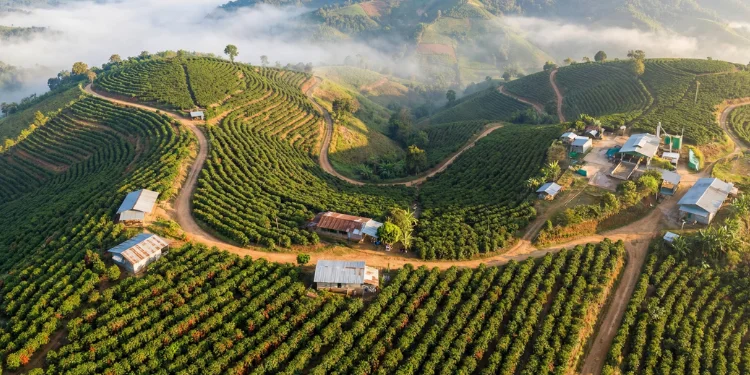
We’re entering the age of the Terroir Bar — cafés and coffee spaces where origin isn’t just a word on a label, but a living, breathing part of the experience. These aren’t places that simply serve “Ethiopian” or “Guatemalan.” They serve red bourbon, double-washed, grown at 1,750 masl on the west-facing slope of a family-run farm outside Huehuetenango — and they’ll show you what that means in the cup.
This is more than single origin. It’s story-forward coffee — and it’s one of the most meaningful shifts happening in specialty coffee today.
What Exactly Is a Terroir Bar?
Think of a terroir bar as a hybrid between a café, a wine tasting room, and a storytelling studio. It’s a space where every decision — from what’s brewed to how it’s served — is designed to honor place, process, and people.
Here’s what sets them apart:
- Micro-Lot Focus: Menus don’t just list origin. They include farm name, varietal, processing method, altitude, and harvest date. Sometimes even the fermentation tank number.
- Side-by-Side Flights: Taste the same varietal grown at different altitudes. Or three processing methods from the same farm. Just like wine tasting, the goal is to deepen your sensory awareness — not just enjoy, but understand.
- Transparent Sourcing: Many terroir bars work directly with producers or cooperatives, often bypassing traditional importers to foster long-term relationships. QR codes link to interviews, soil data, even cupping notes from origin.
- Roasting as Expression: Some roast in-house using small-batch fluid-bed or sample roasters, adjusting profiles in real-time based on cupping feedback — bringing roast and brew into the same conversation.
Why Now?
In a world increasingly dominated by algorithms, convenience, and automation, there’s a growing hunger for something slower, more human, more grounded. Terroir bars speak directly to that desire. They invite you to pause, to taste with intention, and to connect — not just with flavor, but with the hands that brought it to life.
We’re seeing these spaces bloom in cities like:
- Copenhagen, where Nordic-style bars offer minimalist tasting menus
- Tokyo, where omakase-style coffee service is paired with hushed reverence
- Portland and Melbourne, where baristas act as guides through a curated sensory journey, often with maps, charts, and storytelling woven into the brew
The Role of the Barista Has Evolved
In terroir bars, the barista is no longer just a technician or a service worker — they’re an interpreter of origin. Like a sommelier, they help you understand why this Pacamara from Chalatenango tastes like blood orange and cedar, and how the altitude and drying beds made that happen.
Their job isn’t just to extract espresso — it’s to extract meaning.
Training programs are adapting, too. The Coffee Quality Institute and SCA are expanding curricula to include terroir theory, farm-level processing knowledge, and sensory interpretation that goes beyond generic tasting notes.
This Is More Than a Trend — It’s a Return
In many ways, terroir bars are not a radical innovation. They’re a return to what coffee always was: a product of place. For centuries, coffee grew in microclimates, harvested by hand, celebrated in local ceremonies. Terroir bars are simply bringing that back into the spotlight — with modern tools, deeper transparency, and global respect.
They remind us: coffee isn’t anonymous. It’s not just a fuel or a fix. It’s land, labor, and love, carried across oceans to your cup.
And when you sit in one of these bars, sipping a pour-over brewed with care, listening to the story of the family who grew it — something shifts. Coffee becomes not just something you drink, but something you witness.
Final Sips
The rise of terroir bars isn’t about elitism. It’s about intentionality. About choosing depth over speed, story over silence.
And in 2026, that’s something more and more people will be thirsty for.