
Back to Top
January 06, 2026
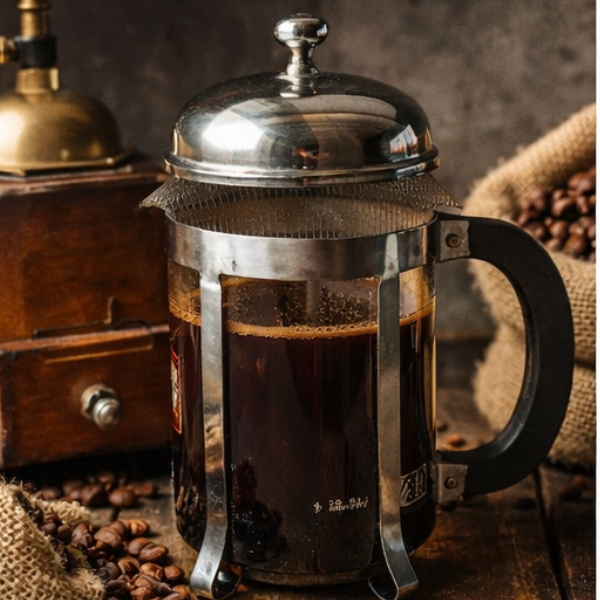
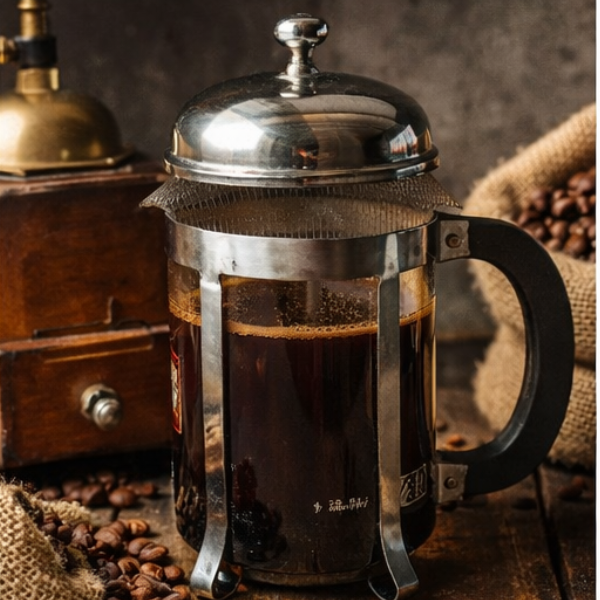
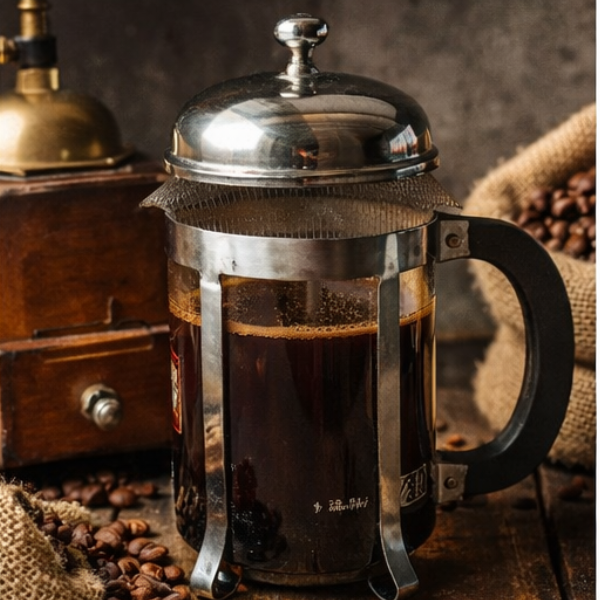
The French Press: A Century of Immersion and Elegance
Who Really Invented the French Press?
Though beloved around the world for its simplicity, the French press has a surprisingly tangled history. It was first patented not in France, but in Milan, Italy in 1929, by Attilio Calimani, an Italian designer. Yet the design evolved over decades before becoming the sleek glass-and-metal version we know today.
An Italian Invention, a French Icon
Calimani’s original device used a metal screen and plunger to separate ground coffee from water after steeping — a method now known as full immersion brewing. This innovation eliminated the need for cloth or paper filters, allowing natural oils and fine particles to remain in the cup, resulting in a richer mouthfeel and bolder flavor.
(Source: Hoffman, James. The World Atlas of Coffee, 2nd ed., Mitchell Beazley, 2018, p. 127)
The Bondanini Era and European Popularity
The design was later refined by Faliero Bondanini in the 1950s. His version, manufactured by the French company Melior, popularized the press in France, which is how it earned its current name. Over time, it gained popularity in the UK, North America, and beyond — prized for being affordable, durable, and capable of producing complex brews without electricity.
Why It Endures: Flavor, Ritual, and Simplicity
Today, the French press is not only a staple in homes and cafes but also a symbol of mindful coffee preparation — a method that invites you to pause, wait, and savor.
It stands as one of the few brewing methods where you control everything: water temperature, steep time, grind size. And perhaps that’s why, even after nearly a century, the French press remains as relevant as ever.